Essential Car Safety Features and How They Protect You
India has some of the broadest safety challenges on roads in the present day, such as high-density traffic, unpredictable driving conditions, and varying infrastructure quality. Hence, every driver needs to know about modern car safety features. These technologies are designed to either avoid an accident or mitigate injuries when crashes do take place.
Whether you are buying, scrutinising or renting a car, knowing the ins and outs of these systems allows for safer decision-making. This guide will cover the safety features that are most likely to be available in modern cars, how they work, and what you should look out for when choosing a safe vehicle.
What Is the Difference Between Active and Passive Safety Features in a Car?
Vehicle safety systems are of two basic kinds. The active vehicle safety system prevents any accidents before they occur by providing assistance to the driver and better vehicle manoeuvrability. When a crash takes place, passive safety features save occupants by reducing the likelihood of injury through built-in vehicle protection mechanisms.
| Active Safety Features | Passive Safety Features |
| ABS (Anti-lock Braking System) | Airbags |
| Electronic Stability Control (ESC) | Seatbelts |
| Tyre Pressure Monitoring System (TPMS) | Crumple Zones |
The safest cars use both.
How Do Airbags in a Car Work, and How Many Should a Safe Car Have?
There is no automotive safety device that works better than an airbag in protecting vehicle occupants when a crash occurs. If crash sensors sense a lot of violence, they assess the impact and inflate on contact with difficulty to prevent you from making contact with hard surfaces inside or making injuries worse.
Airbags in modern vehicles can come in a variety of types:
- Dual Front Airbags
Airbags save the driver and front passenger in a frontal crash. They are the bare minimum for modern transportation.
- Side Airbags
Located inside the seats or doors, these protect the chest and torso in side impacts.
- Curtain Airbags
These deploy from the roof lining and serve to protect occupants’ heads in side collision and rollover situations.
- Knee Airbags
Knee airbags were added as part of its frontal crash protection, under the dashboard, to mitigate lower-leg injuries in accidents.
Six airbags in a car have now become an important marker of vehicle safety at the present time. However, as most new Indian cars now come with six airbags as a standard requirement for a 5-star rating in Bharat NCAP, this rule has been supplemented by the provision of these budget models. An airbag only works if you are wearing a seatbelt; without one, an airbag can do harm.
What Are ABS in a Car and Why Is It a Must-Have Safety Feature?
ABS stands for Anti-lock Braking System and helps in preventing the wheels from locking while braking suddenly or hard. Consequently, it keeps the tyre’s grip and prevents loss of steering control, which empowers drivers to stay in control in emergencies.
Hard braking in a car with no ABS can lead to wheel lock-up and loss of steering control, as well as skidding. Also, EBD (Electronic Brake-force Distribution) accompanies ABS in cars, which automatically varies the amount of braking force to the front and rear wheels for better stability and braking performance.
For example, the ABS acts during a sudden brake on a wet road to help retain steering control and prevent skidding.
Note: Presently, ABS with EBD has become a requirement on all new passenger vehicles sold in India under CMVR.
What Is Electronic Stability Control and How Does It Prevent Accidents?
Electronic Stability Control (ESC), also called Electronic Stability Program (ESP), is one of the most necessary car safety features in a modern-day automobile. It monitors the car’s control when your car enters a skid, oversteer or understeer loop by constantly measuring steering angle, wheel speed and vehicle direction. ESC will control the car when it’s actually on; it intervenes automatically by braking specific wheels and cutting back engine power to correct a vehicle that’s getting out of line.
ABS and ESC work together, but each assumes a different role. ABS prevents wheels from locking up during stops, and ESC helps keep drivers in control of the vehicle while cornering or making an emergency manoeuvre.
- Real-World Use Case
What if you make a sharp turn too quickly or move suddenly to avoid something? ESC can take action and help prevent the vehicle from spinning by intervening automatically. ESC is now compulsory for all new passenger vehicles in India.
What Is a Tyre Pressure Monitoring System (TPMS) and Does It Improve Safety?
The Tyre Pressure Monitoring System (TPMS) is one of the sensor systems that monitors the tyre pressure in real time. It informs the driver whenever the tyre pressure is less than the minimum recommended safe level.
Lightweight bias-ply tyres fitted to a smaller rim can lower the likelihood of blowouts, fuel consumption and braking ability. In India, TPMS is nowadays offered as standard across mid-segment and premium-range cars.
Practical Safety Tips:
- Manually check tyre pressure on any long highway journey.
- Don’t depend solely on TPMS, because it’s just a safety aid. It’s not meant to replace regular tyre maintenance either.
What Are Crumple Zones in Cars and How Do They Protect Passengers?
Crumple zones are purposefully located areas at each end of a car that deform in a crash. They absorb energy from a crash, which, together with other car safety features today, increases the time over which an impact occurs. This means more of the force is absorbed before reaching the passenger cabin, which should reduce the risk of serious injury.
In comparison, a perfectly rigid frame would pass the majority of crash energy directly to occupants. In addition, modern cars also feature similar structural protection, as well as reinforced side door beams, glucosamine B-pillars and roof-strengthening reinforcements. Collectively, these pieces allow the cabin to withstand damage in a collision.
A car’s safety cage is what stands between a crash and its passengers.
Bharat NCAP body shell ratings: Upon colliding with another vehicle, a car’s structure is tested for how well it protects its occupants.
What Are ADAS Features in a Car and How Do They Reduce Accidents in India?
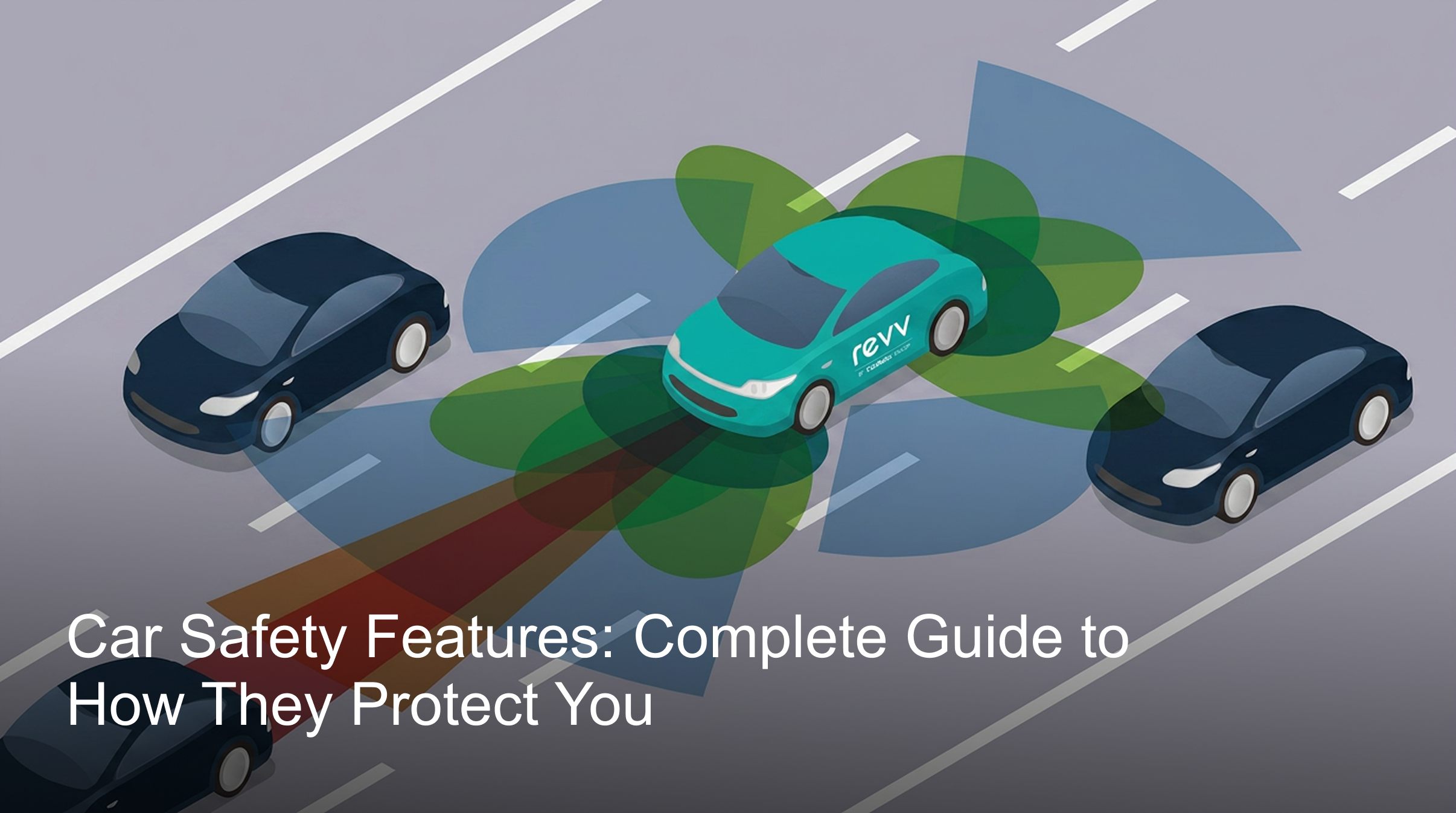
One of the latest innovations in automotive safety is Advanced Driver Assistance Systems (ADAS), which helps drivers with various tasks on the road using cameras, radar, sensors, and software. Consequently, a whole host of contemporary Indian cars come with unexpected Level 2 (ADAS) functionality as standard or optional fitment in models costing less than ₹10 lakh.
- Automatic Emergency Braking (AEB)
AEB automatically uses the brakes to avoid a collision if it detects that the driver will not be able to do so.
- Lane Departure Warning (LDW)
This system notifies the driver when their vehicle unintentionally drifts out of its lane.
- Lane Keep Assist (LKA)
If drift is detected, LKA uses steering assistance to help guide the vehicle back into its lane.
- Adaptive Cruise Control (ACC)
ACC uses radar to speed up or slow down the vehicle automatically, depending on the traffic in front of your car.
- Blind Spot Detection
This system detects zones that are harder to see through the mirrors and signals the driver if a nearby car is present.
- Forward Collision Warning (FCW)
When the system detects that there may be a risk of frontal collision ahead, FCW alarms the driver.
Together, they assist with workload reduction and help mitigate the risks of accidents resulting from both delayed reactions and reduced awareness.
What Is ISOFIX and Why Is It the Safest Way to Secure a Child Seat in a Car?
ISOFIX is a method of restraint in cars; it allows you to secure child seats using the same technology throughout the world. It differs from the conventional seatbelt system in that it is integrated into your vehicle itself and has anchor points built into the body of the vehicle. It offers you a higher level of security than the conventional seatbelt system. As a result, it cuts down on mistakes and keeps kids safer. These car safety features are super important for family vehicles.
Important ISOFIX Tips
Check ISOFIX safety tips for getting the most out of your child restraint.
- Always verify and check that the car seat fits in your vehicle.
- Follow all the installation instructions from the company closely.
- If either option needs to be used, always use the top tether anchor for additional security.
- Ensure that the seat is right for your child in terms of age, height and weight.
Correctly installed by an expert, a car seat will reduce the severity of injuries in a collision.
What Is the Bharat NCAP Safety Rating and How Does It Help You Choose a Safer Car?
Bharat NCAP is India’s official vehicle crash-testing programme. It’s been operational since October 2023 and uses Global NCAP’s 2022 standards. Thus, it lets buyers compare car safety easily with a standardised rating system.
The programme checks how well cars protect adults and kids, how sturdy they are, and their safety tech. Cars get star ratings from one to five, showing how well they shield people in crashes. So, before you buy a car, check its Bharat NCAP score and safety ratings, not just how cool it looks or what brand it is.
What Car Safety Features Should You Check Before Renting or Buying a Car in India?
Conduct the following practical checklist before placing it on wheels and ensure that it meets basic safety standards.
1. Minimum 6 Airbags:
Check that more advanced crash protection is available with front, side and curtain airbags.
2. ABS with EBD:
Check whether the vehicle has an Anti-lock Braking System (ABS) and Electronic Brake-force Distribution.
3. Electronic Stability Control (ESC):
Electronic Stability Control (ESC). It helps avoid the loss of control and sliding of vehicles using sudden braking techniques.
4. ISOFIX Child Seat Mounts:
ISOFIX is another feature worth checking if infants or toddlers travel in your vehicle frequently.
5. Rear Seatbelt Reminders:
For better safety measures, the vehicle should be equipped with a rear seat belt reminder system.
6. Tyre Pressure Monitoring System (TPMS):
Check the TPMS for early warnings on any unsafe levels of tyre pressure.
7. Rear Parking Camera and Sensors:
Think of some safety systems for your car that will improve its visibility from the back and prevent you from rear-ending others.
8. Bharat NCAP or Global NCAP Rating:
Look at the crash-test rating, which indicates how well a vehicle will really perform in an accident.
Using this checklist will help you to have safety front-of-mind instead of an afterthought.
Conclusion: Safety Features Aren’t a Bonus – They’re the Baseline
Safety features are a key part of the modern-day automobile era, moving from extra luxury to a basic necessity. The proliferation of Bharat NCAP ratings, mandatory ABS and ESC systems, plus six-airbag norms, speaks volumes about how far automotive safety expectations have evolved. When it comes to buying or leasing, the first box that should be checked is safety.
Don’t compromise on safety. All Revv cars are maintained, insured and ready for the road. Book now.
Frequently Asked Questions
The top safety features are six airbags, ABS and EBD, ESC, ISOFIX anchors, TPMS, and a great Bharat NCAP rating.
ABS makes sure that the wheels don’t lock up when braking, and the driver can still control the steering wheel. ESC makes sure that the car doesn’t slip when turning.
Bharat NCAP is India’s car safety rating system. You should always refer to the rating comparison tool before buying your car.
In a modern good car, there must be a minimum of 6 airbags that include front and side airbags and even curtain airbags.
ADAS includes Automatic Emergency Braking (AEB), Lane Keep Assist (LKA), and Adaptive Cruise Control (ACC). ADAS uses the latest technologies that avoid road accidents through the use of sensors and cameras. They have been included in cars sold in India, besides luxury cars.