
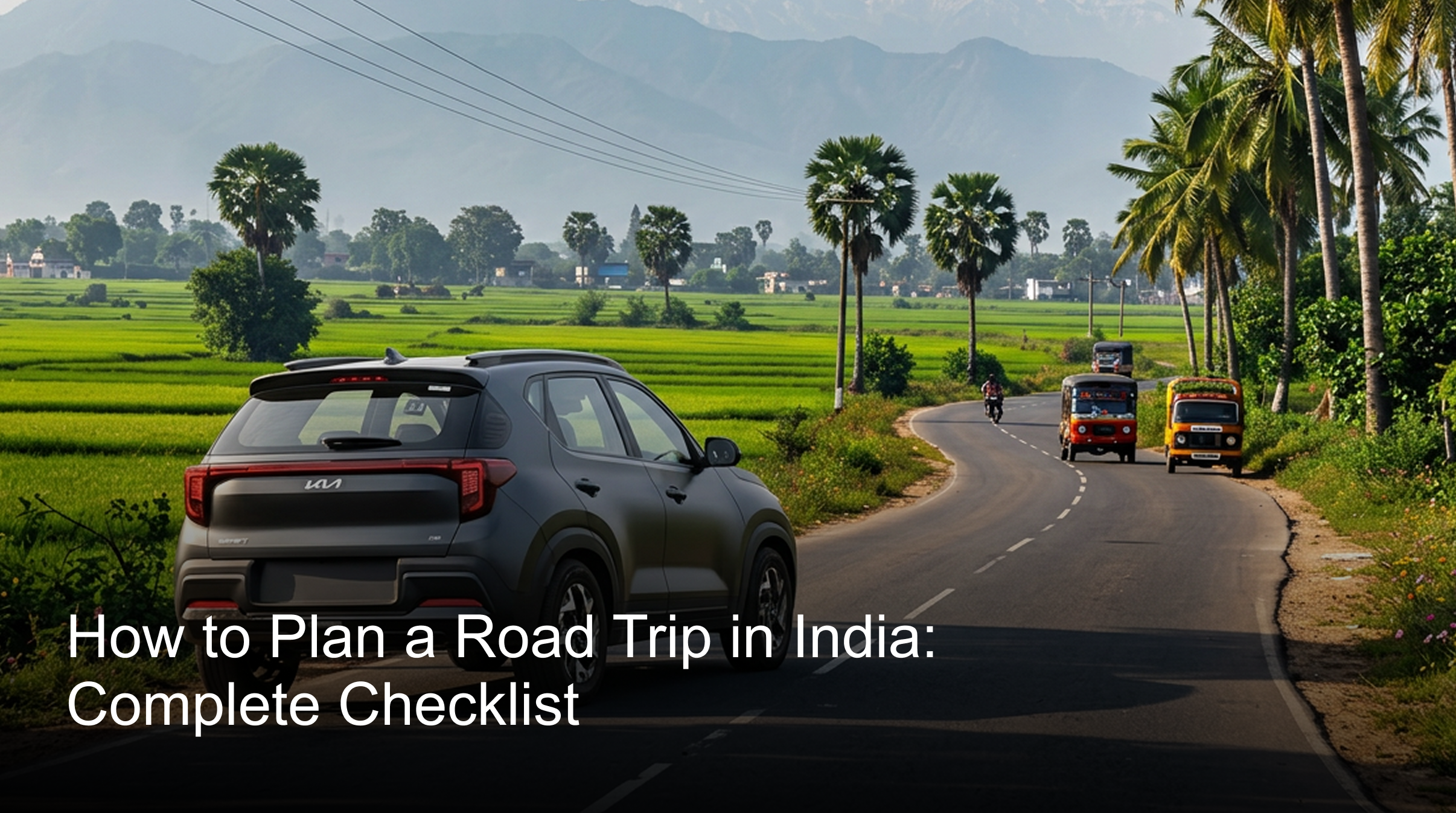
How to Plan a Road Trip in India: Your Complete Checklist
Key Takeaways
- Learning how to plan a road trip in India begins with considering your route and budget, not booking a car.
- Select the vehicle according to the route: a hatchback for short routes and an SUV for hilly and long routes.
- Add features like unlimited km, insurance policy, and cancellation policy to your list.
- Always remember that you should keep the driving license and documents of the car separate, both physically and in DigiLocker.
- Keep your things in three different categories: car things, personal things, and the emergency box.
- Check your tyres, fluid level, braking system, and lights always before you start your journey.
A great drive could be an adventure, whereas a bad drive could be something one wishes not to remember. That is why learning how to plan a road trip in India is crucial for a great experience. Here you will find out about the six most important stages of preparing for a road trip in India: choosing a route and a car, gathering documents, packing correctly, checking the car, and driving safely on the highway.
What’s the First Step in Planning a Road Trip in India?
Planning the route and determining the budget come first before one decides to hire a vehicle. This is because all the other considerations are influenced by these two, and therefore one needs to get them right.
How Do You Choose and Book the Right Car for a Road Trip?
Match the car to the journey, not just the budget. The choice of a hatchback for journeys in the vicinity of the city, an SUV/MPV for hilly terrain and long distances, and an automatic for new roads in unknown traffic is one of the easiest self-driving road trip tips. After selecting the category of the car, everything else follows much quicker.
What to Check Before Confirming Your Booking?
Check a couple of things before clicking on that “confirm” button so as to avoid any unpleasant surprises down the road.
- Unlimited kilometre packages for long-distance drives
- Detailed insurance and damage liability terms
- Cancellation terms that can accommodate future changes in your plans
- Free doorstep delivery service so you won’t have to visit a pickup location.
Crossing them off ahead of time, while on the road trip checklist, avoids that uncomfortable phone call to customer service in the middle of your travels.
What Documents Do You Need for a Road Trip in India?
The documentation process separates the driver documents from vehicle documents, both of which have equal importance at highway checkpoints. Additional permits might be required during an interstate journey; hence, this is the point how to plan a road trip in India will be highly valuable. Lack of proper documentation results in more trouble than the rough roads themselves.
Documents the Driver Must Carry
Carry these documents all the time; it is better to have them both physically and digitally via DigiLocker.
- Valid Driving Licence (hard copy or the DigiLocker copy)
- Any government-issued identification like Aadhaar, passport, or voter ID
- Rental agreement or the proof of booking in case you are hiring a car.
The Ministry of Road Transport and Highways recommends that states consider DigiLocker/mParivahan copies of your licence and RC as being on par with their originals.
Documents the Car Must Carry
This car must have its own documentation trail, which must be up-to-date before you start the ignition.
- Registration Certificate (RC), where ownership is updated
- Vehicle insurance policy, at least third-party, according to the Motor Vehicles Act
- PUC (Pollution Under Control) certificate, which is valid for three to six months
Failure to carry the documents required for a road trip may prove expensive, considering the varying penalties that one may incur for lack of license, RC, insurance, and PUC certificates.
What Should You Pack for an Indian Road Trip?
Divide your packing into three categories: the things that are required in your car, like the spare tyre and jumper cables; your personal things, like sunscreen and a first-aid kit; and the emergency kit containing a torch and a reflective triangle, making up your road trip essentials.
What Should You Inspect on the Car Before You Start Driving?
Checking the engine quickly won’t cut it once you’ve added up all those hours on the road. This is the stage of planning a road trip in India during which breakdowns are largely averted.
- Exterior, Tyres and Fluid Levels
Circulate around the vehicle, checking the tyres and the spare tyre for pressure and wear. Open up the hood and check the engine oil, coolant, and brake fluid. Also, check lights and windscreen wipers.
- Interior, Documents and Emergency Kit
Verify that the air conditioner is working and all the seat belts lock into place. Complete your car checklist before the road trip, ensuring you have everything in your glove compartment and emergency kit.
What’s the Bottom Line for Planning a Road Trip in India?
Right route, proper budget, correct vehicle, complete documentation, and a 5-minute walkaround each day can solve almost all the problems you can face during a road trip. Do all these things, and you will see that other parts of your road trip take care of themselves. Now that you have learned how to plan a road trip in India, just book yourself a good car.
The route and budget come first because they determine the choice of car, the items to be packed, and the daily routine. Once these two are done right, the rest is automatic.
A driving license, the car’s RC, insurance papers, and a valid PUC certificate are a must; keep them both physically and in DigiLocker. Any omission will attract penalties at a checkpost.
The budget is usually allocated between fuel, tolls, stay, and food, with stay accounting for the biggest portion at about thirty-five to forty per cent. Include a 10% contingency allowance.
If you are driving on an uneven surface, then an SUV or MPV is a better choice than a hatchback. But a hatchback would do the job if the drive is relatively short and close to the city.
Tyre checks, fluid checks, brake checks, and lighting should take priority, while also verifying whether documents are kept inside the glove box. This practice is key to understanding how to plan a road trip in India safely.